Get 5% Off your first order! Use Code : MEWAMITRA5
Free Flavoured Cashews on Orders Above ₹2999
🚚 Free Shipping on Orders Above ₹799 | Shop Now & Save More!
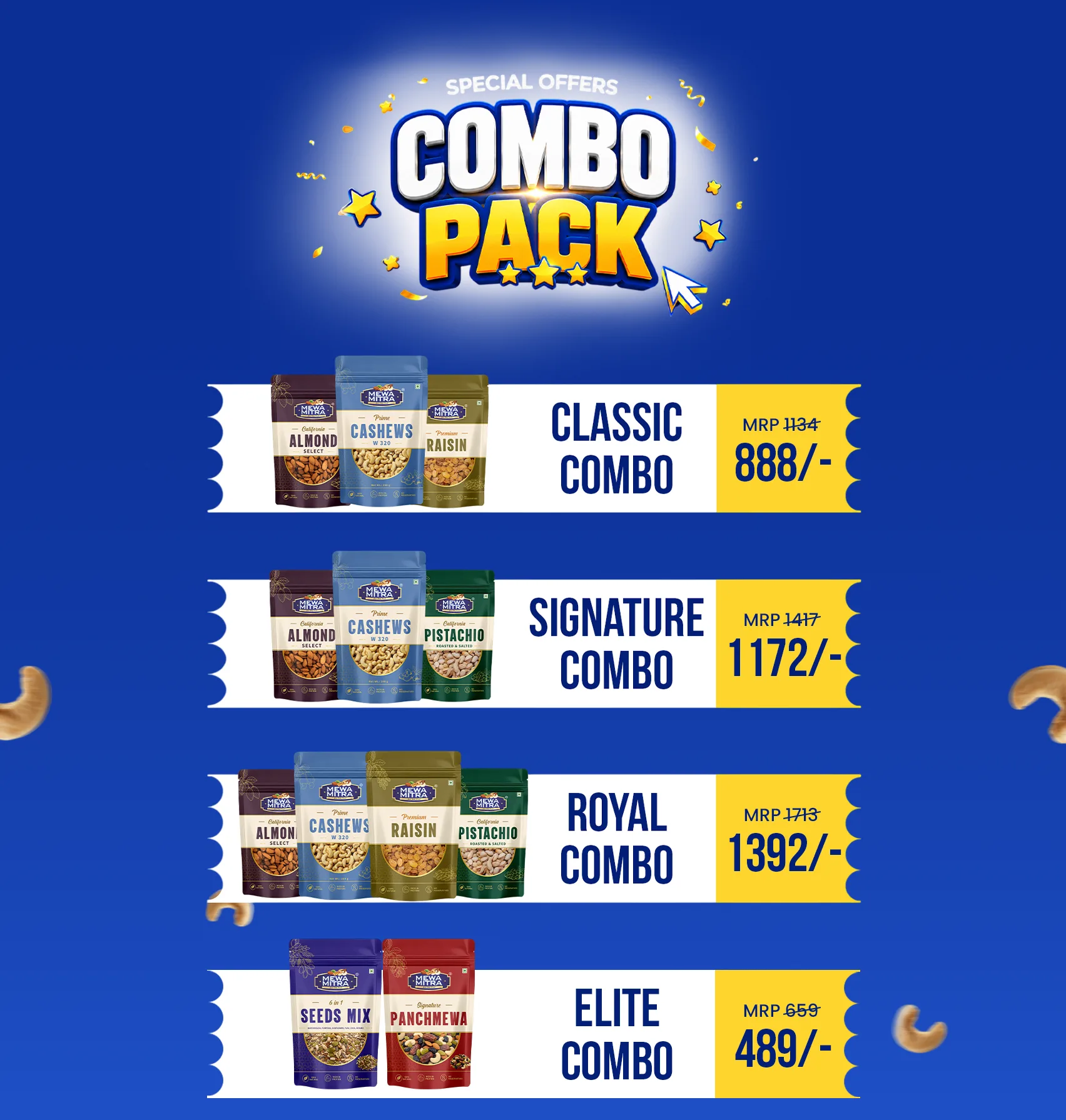
Mewa Mitra Royal Combo – ₹1,392 | Premium Dry Fruits
Mewa Mitra Signature Combo – ₹1172 | Best Seller
Mewa Mitra Classic Combo – ₹888 | Value Pack
Mewa Mitra Elite Combo – ₹489 | Value Pack
Get 5% Off your first order! Use Code : MEWAMITRA5
Free Flavoured Cashews on Orders Above ₹2999
🚚 Free Shipping on Orders Above ₹799 | Shop Now & Save More!
Mewa Mitra Royal Combo – ₹1,392 | Premium Dry Fruits
Mewa Mitra Signature Combo – ₹1172 | Best Seller
Mewa Mitra Classic Combo – ₹888 | Value Pack
Mewa Mitra Elite Combo – ₹489 | Value Pack

Flavoured Cashews vs Plain Roasted Cashews. Which Is Healthier?

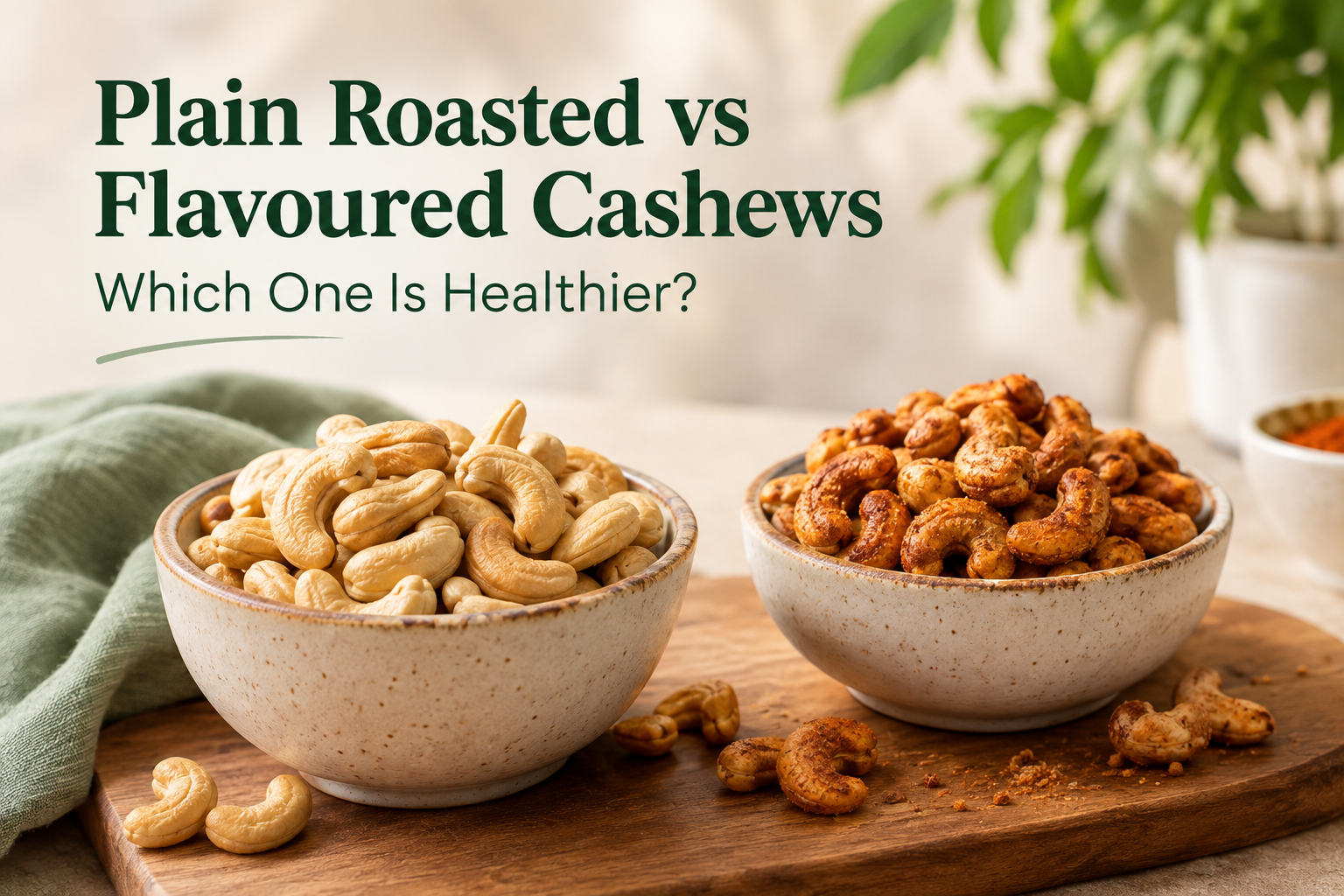
You are standing in front of two packs of cashews. One is plain roasted, golden and simple. The other is covered in masala, chilli and seasoning. Your hand reaches for the flavoured pack, but then you notice the nutrition label and wonder: Is plain roasted cashew actually the healthier choice?
The answer is not as simple as saying one is “good” and the other is “bad.” Both start with the same nutritious nut. The main difference is what gets added during and after roasting: salt, oil, sugar, spices and other flavouring ingredients.
So, which one should you choose? It depends on your health goals, portion size and how often you eat them. Let us compare them the way you would in a real shop, starting with what is actually inside the packet.
What exactly is a plain roasted cashew?
A plain roasted cashew is a cashew kernel that has been heated until it becomes crisp and lightly golden. Some varieties are dry roasted, meaning they are roasted without added oil. Others may be roasted with a small amount of edible oil. A lightly salted version may contain only cashews, oil and salt.
The roasting process brings out the cashew’s natural buttery flavour and makes it crunchier without needing a heavy seasoning coating. That simplicity is the biggest advantage of plain roasted cashews: you can easily see and understand what you are eating.
What is a flavoured cashew?
A flavoured cashew starts with the same cashew kernel, but additional ingredients are used to create a stronger taste.
Depending on the product, the seasoning may include:
- Salt
- Chilli
- Black pepper
- Chaat masala
- Herbs and spices
- Onion or garlic seasoning
- Sugar
- Starch-based ingredients
- Edible oil
- Flavouring agents
The exact ingredients vary from one brand and flavour to another, so the nutrition and ingredient label is worth checking before you buy.
For example, our Flavoured Cashew Roasted Salted range is made for people who want more flavour than a traditional roasted cashew. You can explore the available cashew varieties at Mewamitra Shop.
Taste: Which one is more enjoyable?
Plain roasted cashews have a naturally creamy, buttery and mildly sweet taste. You can actually taste the nut instead of the seasoning. They work particularly well when you want something simple with tea, breakfast or as part of a homemade snack mix.
Flavoured cashews are different. The combination of salt, spice and seasoning gives them a much stronger taste. They can be particularly enjoyable at parties, during travel or when you want a snack with a little more excitement.
Think of it this way: Plain cashews let the nut be the star. Flavoured cashews make the seasoning part of the experience.
If you enjoy spicy snacks, flavoured cashews may naturally be more appealing. If you prefer the original taste of nuts, plain roasted cashews are likely to suit you better. The more important difference comes when we look at the ingredient list and nutrition panel.
Plain vs flavoured cashews: What changes nutritionally?
The cashew itself remains the main source of nutrition in both products.
Cashews naturally provide:
- Plant-based protein
- Unsaturated fats
- Dietary minerals such as magnesium, copper and zinc
- Some dietary fibre
- Energy from healthy fats and carbohydrates
The difference is generally in the additional ingredients. Plain roasted cashews can have a relatively short ingredient list, particularly when they are dry roasted and unsalted. Flavoured cashews may contain additional salt, oil, sugar, starches or seasoning ingredients. Depending on the recipe, these additions can increase sodium, calories or carbohydrate content.
That does not automatically make every flavoured cashew an unhealthy food. It simply means that the label matters more. Two packets with different flavours can have very different nutrition profiles.
Which is better if you are watching your weight?
For regular snacking, plain roasted or dry roasted cashews are usually the simpler option. But there is an important point that is often missed: cashews themselves are energy-dense.
Even plain cashews can contribute a significant amount of calories if you keep eating handful after handful. The easiest approach is portion control. Instead of eating directly from the packet, take a small serving into a bowl and put the packet away. This makes it easier to know how much you have eaten.
Flavoured cashews can be harder to portion for some people because the strong combination of salt and spices can make them particularly easy to snack on. If weight management is your goal, your total portion and overall diet matter more than simply choosing a plain or flavoured variety. For more practical ideas, see our guide to mewamitra.com/best-dry-fruits-for-weight-management/.
Which is better for blood pressure?
If you are trying to reduce your sodium intake, plain unsalted or lightly salted cashews are generally the easier choice.
The reason is straightforward: many flavoured snacks contain added salt, and sodium intake can add up when you regularly eat other salty foods such as namkeen, pickles, papad and packaged snacks.
However, do not judge a product only by its flavour name.
A “masala” cashew is not automatically high in sodium, and a “plain” cashew is not necessarily low in sodium.
Check the nutrition panel and compare the sodium per serving.
If you have been advised by a doctor or dietitian to follow a low-sodium diet, use their recommendation as your primary guide.
Which cashews are better for people with diabetes?
Plain, unsalted or lightly salted cashews can be a practical choice because they generally do not contain the added sugar or starch-based coatings that some flavoured snacks may have.
But cashews are not a free food simply because they are a nut.
Portion size still matters because cashews contain carbohydrates and are relatively calorie-dense.
When comparing flavoured products, check the total carbohydrate and added sugar, as well as the ingredient list.
If you are managing diabetes, your individual dietary needs should take priority over general snack advice. Our guide at mewamitra.com/diabetic-friendly-dry-fruit-snacking/ covers the topic in more detail.
What about children?
For everyday snacking, plain or lightly seasoned roasted cashews are usually a simpler option than heavily spiced varieties.
Very salty or spicy coatings may not be suitable for young children, particularly if they are not accustomed to strong flavours.
There is also an important safety consideration that has nothing to do with nutrition.
Whole nuts can be a choking hazard for young children. For toddlers and children who are not developmentally ready to safely chew whole nuts, follow age-appropriate food-safety guidance and ask your pediatrician if you are unsure.
Can you eat flavoured cashews during fasting?
This depends entirely on the fasting rules you follow.
Many commercially flavoured cashews contain ingredients such as regular table salt, onion, garlic, starches or other seasoning ingredients that may not be permitted under certain vrat or fasting traditions.
Plain cashews are easier to check, while products specifically made for fasting may use ingredients such as rock salt.
However, fasting practices differ between families and traditions, so always check the ingredient list rather than assuming a product is vrat-friendly because it contains cashews.
You can also explore our Navratri dry-fruit guide at mewamitra.com/navratri-fasting-dry-fruits/.
Which one works better for parties and gifting?
This is where flavoured cashews can be a lot of fun.
Instead of serving only one variety, you can offer a small selection such as:
- Plain roasted cashews
- Pepper cashews
- Chilli cashews
- Masala cashews
This gives guests different options without making the snack table complicated.
For gifting, a mixed dry-fruit hamper can also be more interesting than a single variety, particularly when you know the recipient enjoys savoury snacks.
For more dry-fruit shopping ideas, visit mewamitra.com/shop/.
How to read a cashew label like a smart shopper
You do not need to be a nutrition expert to compare two packets.
Start with the ingredient list.
For a simple plain roasted cashew, you may see something like:
Cashews + oil + salt
A flavoured product will usually have a longer list because of the seasoning.
Then check these four things:
1. Sodium
If you are trying to limit salt, compare the sodium content per serving.
2. Added sugar
Some flavoured coatings contain sugar. Check the nutrition panel and ingredient list rather than assuming a savoury snack contains no sugar.
3. Added oils
Look at which oil is used and how much fat is provided per serving.
4. Serving size
This is one of the easiest details to overlook.
A nutrition label may look low in calories or sodium until you realise that the listed serving size is much smaller than the amount you normally eat.
Also check the best-before date and packaging condition. Roasted nuts contain oils that can gradually develop an unpleasant stale or rancid flavour when exposed to heat, air and moisture.
A fresh cashew should smell pleasantly nutty. If it smells strongly stale, paint-like or rancid, it is better not to eat it.
Can you roast cashews at home?
Absolutely.
Home roasting gives you one major advantage: you control what goes into the snack.
Place raw cashews in a heavy-bottomed pan over low to medium-low heat. Stir frequently for around 5 to 8 minutes, watching them carefully because cashews can go from golden to burnt surprisingly quickly.
Once they become lightly golden and fragrant, remove them from the heat and allow them to cool.
You can then add a small amount of seasoning according to your preference.
For a simple version, try:
- A pinch of rock salt
- Black pepper
- Roasted cumin powder
For a more Indian-style snack, you can add a little chaat masala once the cashews have cooled slightly.
If you want to experiment with flavours, start with a small batch. It is much easier to adjust the seasoning when you are making 100 grams than when you have seasoned an entire jar.
How long do roasted cashews stay fresh?
Roasting changes the moisture and texture of nuts, while the natural oils remain susceptible to oxidation.
That means storage matters.
Keep roasted cashews in a clean, dry and airtight container, away from direct sunlight, heat and moisture.
Do not repeatedly leave the container open, particularly in humid weather. Moisture can quickly reduce the crunchiness of roasted and flavoured cashews.
Rather than relying only on a fixed number of days, use the product’s packaging instructions and your senses. If the nuts develop an unusual smell, taste stale or show signs of moisture or spoilage, discard them.
So, which cashew should you choose?
The answer depends on the occasion.
| Your purpose | A practical choice |
|---|
| Everyday snacking | Plain roasted or unsalted |
| Watching sodium intake | Unsalted or lightly salted |
| Weight management | Plain, with a controlled portion |
| Diabetes-friendly snacking | Plain, unsalted, portion-controlled |
| Children | Plain or lightly seasoned, age-appropriate preparation |
| Travel | Either, depending on your preference |
| Parties | Flavoured varieties |
| Gifting | A mix of plain and flavoured |
| Fasting | Plain or specifically fasting-compatible, after checking ingredients |
The important thing is not to treat one type of cashew as automatically “healthy” and the other as “unhealthy.”
Plain cashews give you more control over what you are eating. Flavoured cashews give you more variety and taste.
If you enjoy flavoured cashews, you do not necessarily need to avoid them. Treat them as a flavoured snack, pay attention to the serving size and check the label.
And if you prefer plain roasted cashews, there is no need to make them boring. A little black pepper, cumin or another simple seasoning can add plenty of flavour without turning them into a heavily coated snack.
Before buying, you can also learn how cashew sizes and grades differ in our mewamitra.com/raw-cashew-grading-guide/.
Frequently Asked Questions
Are flavoured cashews unhealthy?
Not necessarily. The nutritional profile depends on the recipe. Flavoured cashews may contain more sodium, added oil, sugar or other ingredients than plain cashews, so checking the label is the best way to compare them.
Do roasted cashews lose their nutrients?
Roasting can affect some heat-sensitive nutrients, but roasted cashews still provide protein, unsaturated fats and minerals. The overall nutritional value remains significant.
Can I eat flavoured cashews every day?
You can include them in your diet, but portion size matters. If you eat cashews regularly, choosing a less heavily seasoned variety can make it easier to control your sodium and added-ingredient intake.
Are raw cashews healthier than roasted cashews?
Neither is automatically better for everyone. Raw and roasted cashews have different textures and uses. For snacking, many people prefer roasted cashews because of their crunch and flavour. What matters most is the preparation, ingredients and portion size.
Are unsalted cashews better than salted cashews?
If you are trying to reduce sodium, unsalted cashews make that easier. For people without a specific sodium restriction, lightly salted cashews can still fit into a balanced diet when eaten in sensible portions.
Final thoughts
The next time you stand in front of the cashew shelf, you do not have to choose based only on the words “healthy” or “unhealthy.”
Look at the ingredients, sodium, added sugar, serving size and your own dietary needs.
Choose plain roasted cashews when you want something simple and minimally seasoned. Choose flavoured cashews when you want a more exciting snack or something to share with guests.
And whichever you choose, remember the most important rule: a good snack is not just about what is in the packet; it is also about how much you eat and how often you eat it.
For more practical guides on choosing and enjoying dry fruits, explore the MewaMitra blog at mewamitra.com/blog/.


 Almonds
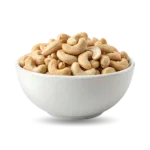 Cashew
 Kaju Katli
 Makhana
 Peanuts
 Pistachios
 Raisins
 Seeds
Seeds Walnuts