Get 5% Off your first order! Use Code : MEWAMITRA5
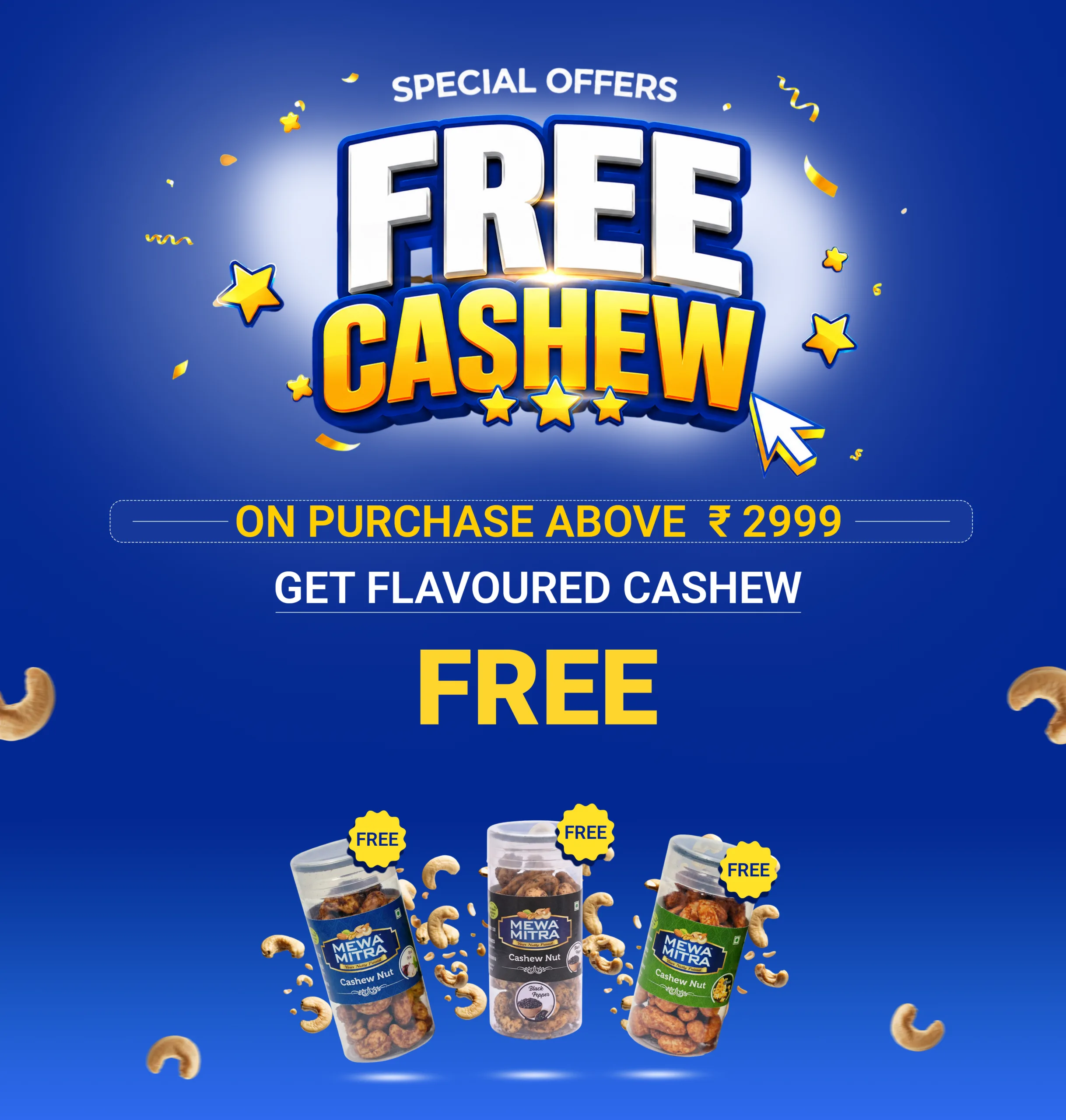
Free Flavoured Cashews on Orders Above ₹2999
🚚 Free Shipping on Orders Above ₹799 | Shop Now & Save More!
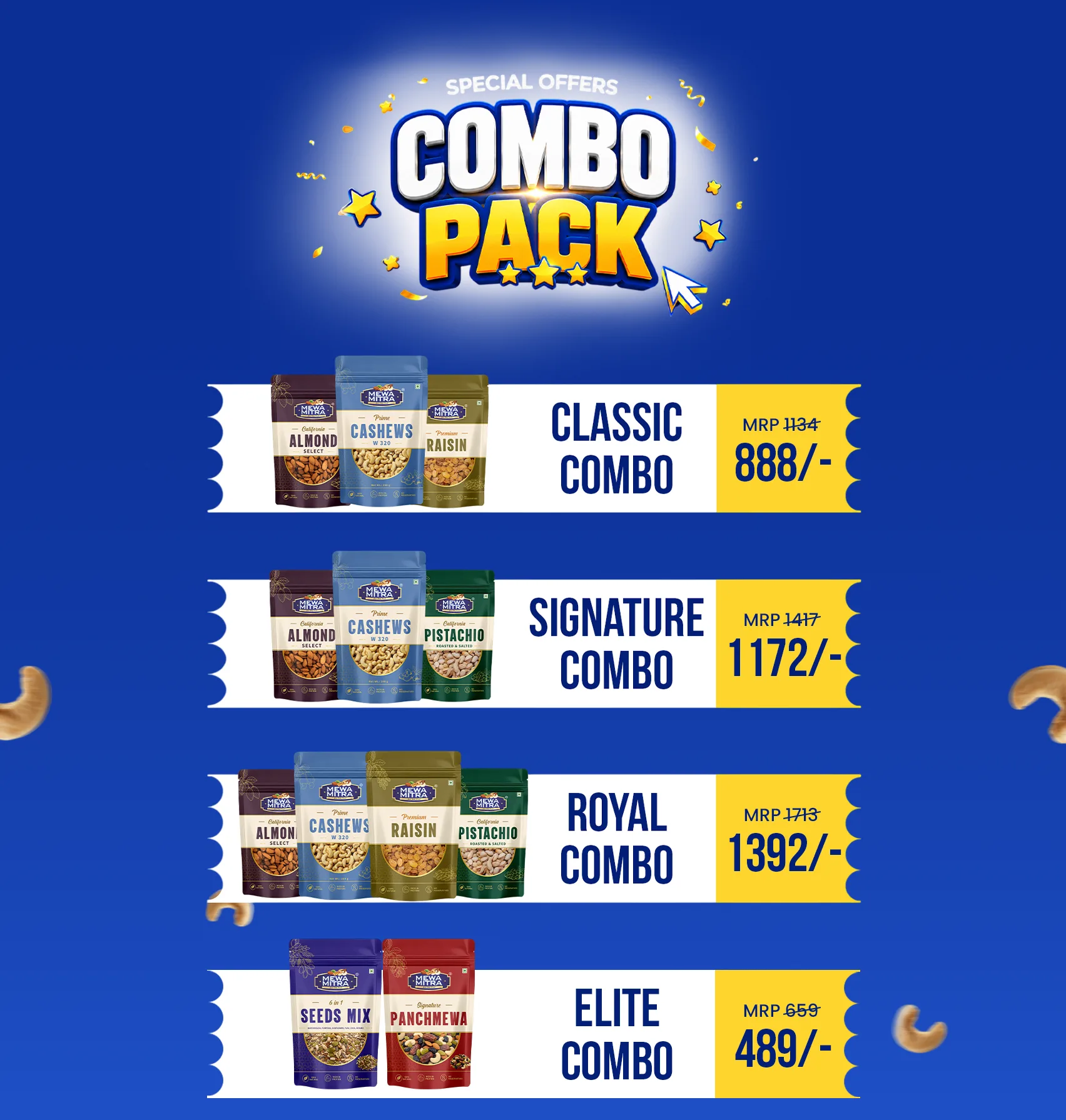
Mewa Mitra Royal Combo – ₹1,392 | Premium Dry Fruits
Mewa Mitra Signature Combo – ₹1172 | Best Seller
Mewa Mitra Classic Combo – ₹888 | Value Pack
Mewa Mitra Elite Combo – ₹489 | Value Pack
Get 5% Off your first order! Use Code : MEWAMITRA5
Free Flavoured Cashews on Orders Above ₹2999
🚚 Free Shipping on Orders Above ₹799 | Shop Now & Save More!
Mewa Mitra Royal Combo – ₹1,392 | Premium Dry Fruits
Mewa Mitra Signature Combo – ₹1172 | Best Seller
Mewa Mitra Classic Combo – ₹888 | Value Pack
Mewa Mitra Elite Combo – ₹489 | Value Pack
Best Cashew {Kaju} Nuts Brand in India: 10 Checks Before You Buy

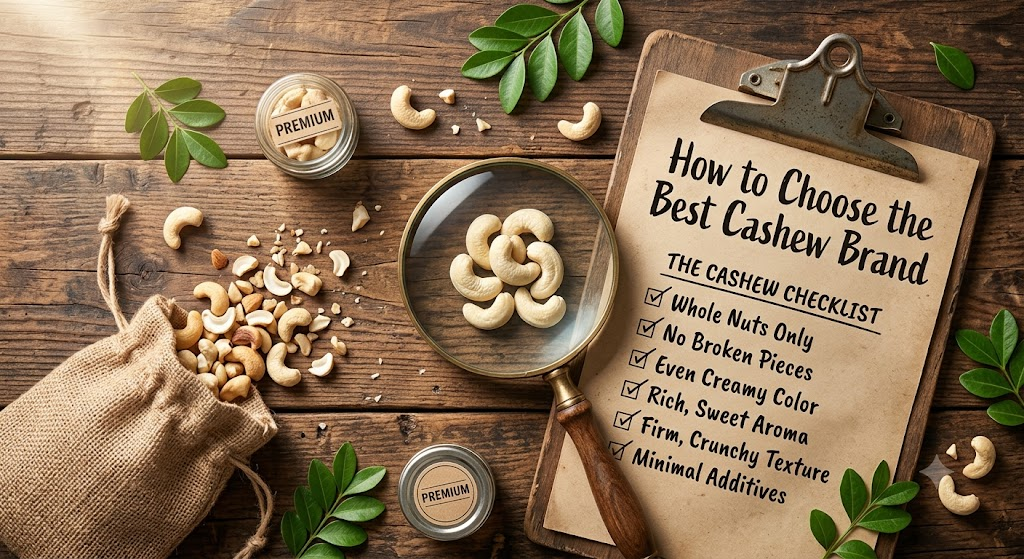
Search for the best cashew nuts brand in India and you will find plenty of options. Every brand has its own packaging, pricing and claims, which can make choosing the right one surprisingly difficult.
But there is a better way to approach it.
Instead of simply asking which brand is the best, learn how to judge freshness, grade, packaging, labelling, food-safety information and value. Once you know what to look for, you can compare almost any cashew brand with confidence.
At Mewa Mitra, our business comes from a family trading background spanning more than seven decades. That experience has taught us an important lesson: a brand is not defined only by its name. What matters is the quality and consistency of the product that reaches the customer.
So, whether you are considering Mewa Mitra or another seller, here are 10 practical checks to make before buying cashews online.
Why Choosing a Cashew Brand Needs Some Care
Cashews contain natural oils, which means freshness and storage matter.
Poor storage, prolonged exposure to heat or moisture, and old stock can affect their taste and texture. You may notice a stale smell, bitterness, softness or loss of the characteristic crunch.
There can also be differences in:
- Cashew grade
- Kernel size
- Whole versus broken content
- Packaging
- Processing
- Freshness
- Labelling
- Price
This is why looking only at the brand name or product photograph is not enough.
Check 1: Look for the Packing and Best-Before Dates
Start with the simplest thing: check the dates.
A properly packaged food product should provide relevant date information on its label.
Fresh cashews generally have a mild, pleasant nutty aroma and a firm texture. If you receive a pack that smells strongly stale or oily, that deserves attention regardless of the brand name.
Do not assume that a product is fresh simply because it is sold by a well-known company. Check the actual pack.
Check 2: Understand the Cashew Grade
The grade tells you a lot about the size and classification of the kernels.
You may see codes such as:
- W180
- W210
- W240
- W320
- W400
- W450
The basic rule is easy:
A smaller number generally means a larger whole kernel.
For example, W180 is larger than W240, while W240 is larger than W320.
W320 is a popular everyday grade, while larger grades such as W180 and W210 are often chosen when presentation matters.
If these codes are new to you, read our complete raw cashew grading guide before comparing products.
For example, if you are considering a W320 pack, check whether the product description clearly explains what grade and kernel type you are buying.
Check 3: Look at Colour, Shape and Appearance
Open the pack and look at the kernels.
Whole cashews generally range from creamy white to light ivory, depending on the product and processing.
Look for reasonably consistent kernels when the product is sold as a whole grade.
Be cautious if a product advertised as whole cashews contains a large amount of broken material or shows unusual discolouration.
A few natural variations can occur, so do not judge quality from one kernel alone. Look at the overall batch.
Check 4: Examine the Packaging
Cashews need protection from moisture, heat, air and strong external odours.
Good packaging should be properly sealed and suitable for food storage.
Depending on the product, you may see:
- Sealed pouches
- Resealable packs
- Jars
- Other protective food-grade packaging
Packaging is not just about appearance. It helps protect the product after processing and during transportation.
This is one reason packaged cashews can be easier to evaluate than loose nuts sold from an open container, where you may have little information about packing date, handling or storage.
Check 5: Look for Food-Safety Information
When buying packaged food in India, check the label for the required food-business information, including the applicable FSSAI licence or registration details.
You should also be able to find other useful information such as:
- Product name
- Net quantity
- Ingredients
- Date information
- Manufacturer or packer details
- Customer-care information where applicable
A clear label gives you more information about what you are buying and who is responsible for the product.
Check 6: Read the Ingredient List
For plain cashews, the ingredient list should be straightforward.
For flavoured or roasted products, there may be additional ingredients such as oil, salt and seasonings.
Take a moment to read them.
Be particularly cautious about exaggerated health claims such as products claiming to “cure diabetes” or guarantee weight loss. A food product should not be treated as a replacement for medical treatment.
If you want to understand the difference between plain and seasoned products, read our guide to flavoured versus plain roasted cashews.
Check 7: Read Reviews Beyond the Star Rating
Reviews can be useful, but do not stop at the average star rating.
Look for comments about:
- Freshness
- Crunch
- Taste
- Packaging
- Broken kernels
- Delivery
- Customer support
Also pay attention to how the seller responds when customers report a problem.
No brand will have a perfect record. What matters is whether there is useful, consistent information from actual customers and whether complaints appear to be handled responsibly.
Check 8: Compare the Price Properly
Price alone does not tell you whether a cashew is good or bad.
A very cheap product may have a different grade, smaller kernels, more broken pieces, a different pack size or another reason for the price difference.
At the same time, a high price does not automatically guarantee superior quality.
When comparing products, check:
Price per 100 grams + grade + whole/broken status + product type.
For example, comparing a W180 premium whole cashew with a W320 cashew purely by total pack price would not give you a meaningful comparison.
If you are trying a new brand for the first time, a smaller pack can also be a sensible way to evaluate the product before buying a larger quantity.
Check 9: Test the Customer Support
Before buying online, see whether the seller provides clear ways to contact them.
Look for:
- Contact information
- Shipping details
- Return or replacement policies where applicable
- Customer support information
- Order-related assistance
This becomes particularly important if a package arrives damaged or the product does not match its description.
A transparent buying experience is part of choosing a reliable seller.
Check 10: Look at the Product Range
Different cashew grades and formats serve different purposes.
A seller with clearly described products should make it easier for you to choose according to your needs.
For example:
Whole cashews are suitable for snacking, serving and gifting.
Broken cashews and pieces are useful for cooking, baking, sweets and grinding.
Roasted cashews can work as ready-to-eat snacks.
Flavoured cashews are suited to people who want seasoned snack options.
Mewa Mitra’s cashew range includes options such as whole cashews, broken cashews, cashew mixes and flavoured varieties.
The important thing is not simply having a large catalogue. It is being clear about what each product actually contains.
A Simple Quality Test When Your Cashews Arrive
You can do a basic quality check at home without any special equipment.
First, smell them.
Fresh cashews should have a mild, pleasant nutty smell.
A strong stale, sharp or paint-like odour can indicate that the nuts have deteriorated.
Next, look at them.
Check the colour, shape and amount of breakage against the product description.
Then, check the texture.
Fresh cashews generally have a firm texture and a pleasant crunch.
Soft or chewy kernels may indicate moisture or loss of freshness.
Finally, taste a small amount.
Good cashews generally have a mild, creamy and slightly sweet flavour.
A strong bitter or stale taste is a warning sign.
If there is a genuine issue with the product, contact the seller promptly and keep photographs of the packaging and product.
Common Mistakes People Make When Buying Cashews
Buying Only on Price
The cheapest pack is not necessarily the best value.
Always compare the grade, quantity and product type.
Buying a Large Pack From an Unknown Seller
If you have never tried a brand before, consider starting with a smaller pack.
Ignoring the Dates
Freshness matters with nuts. Always check the date information.
Believing “Premium” Means a Specific Grade
Words such as premium, jumbo or super quality are not enough by themselves.
Look at the actual grade and product description.
Storing Cashews Incorrectly
Even a fresh pack can lose quality if you leave it open in a warm or humid place.
How to Store Cashews After Buying
Once you open the package, transfer the cashews to a clean, airtight container if the original packaging is not suitable for repeated storage.
Keep them:
- Away from direct sunlight
- Away from heat
- Away from moisture
- Away from strong-smelling spices
- In a cool, dry place
During hot and humid weather, refrigeration can help maintain freshness for longer.
Always use a clean, dry spoon or utensil when taking cashews from the container.
If your cashews develop a strong stale smell or unpleasant taste, it is better not to consume them.
Why Do People Buy Cashews in the First Place?
Cashews are popular because they are versatile as well as tasty.
They can be eaten as a snack, added to Indian gravies, used in sweets, mixed into desserts or included in festive gift boxes.
Nutritionally, cashews provide nutrients including protein, unsaturated fats, magnesium, copper and zinc.
If you want to understand their nutritional profile in more detail, read our guide to the health benefits of cashews.
If you are choosing nuts as part of a weight-management routine, our guide to the best dry fruits for weight management may also be useful.
And if blood-sugar management is a concern, read our guide to diabetes-friendly dry fruit snacking for general information about portions and snack choices.
What Makes a Cashew Brand Worth Considering?
There is no universal answer to the question, “Which is the best cashew brand in India?”
Different buyers have different priorities.
Someone buying cashews for daily snacking may care most about freshness and value.
Someone buying for a wedding or festival gift may prioritise large, attractive whole kernels.
A sweet maker may care more about consistent pieces and bulk pricing.
A family may simply want a reliable product with clear labelling and good packaging.
That is why it is better to judge a brand using measurable checks rather than relying on a “best brand” claim.
Buying Cashews in Bulk
If you are buying cashews for a restaurant, catering business, sweet shop, retailer or other commercial requirement, the buying process is slightly different.
You may want to ask about:
- Available grades
- Whole versus broken kernels
- Pack sizes
- Minimum order quantities
- Delivery timelines
- Pricing
- Payment terms
- Consistency between batches
For larger requirements, speak directly with the supplier and explain how you plan to use the cashews.
Mewa Mitra also accepts bulk enquiries for customers with larger requirements.
What We Try to Do at Mewa Mitra
We do not believe that simply calling ourselves the “best cashew brand” proves anything.
Instead, our focus is on things customers can actually check: clear product information, appropriate packaging, straightforward communication and consistent attention to product quality.
Our family trading background goes back more than seven decades, but we know that history alone does not make every pack perfect.
The product still has to meet the customer’s expectations.
That is why feedback matters.
You can explore the Mewa Mitra cashew collection to compare different options for snacking, cooking and gifting.
Frequently Asked Questions
Which cashew grade is best for daily use?
W320 and W240 are popular choices for everyday use. W320 is a practical medium-sized whole grade, while W240 offers a larger kernel.
Is it safe to buy cashews online?
Buying cashews online can be convenient. Before ordering, check the product description, packaging information, date details, food-safety information, seller policies and customer reviews.
How long do cashews stay fresh?
The shelf life depends on the product, packaging and storage conditions. Follow the manufacturer’s best-before information and store opened cashews in an airtight container in a cool, dry place.
Are branded cashews better than loose cashews?
Not automatically. A brand name alone does not guarantee quality. Packaged products can provide useful information about grade, quantity, dates, ingredients and food-business details, while the actual product quality still needs to be considered.
How can I tell if cashews are stale?
Common signs include a strong stale or rancid smell, bitter taste, unusual softness and loss of their normal texture.
Is W180 healthier than W320?
No. W180 is larger than W320, but the grade primarily describes size and whole-kernel classification. A larger cashew is not automatically more nutritious.
Should I buy W180 or W320?
Choose based on your purpose. W180 is useful when larger kernels and presentation matter, while W320 can be a practical choice for everyday snacking and cooking.
What is the best way to compare two cashew brands?
Compare the same grade and quantity, then look at freshness, packaging, ingredients, food-safety information, customer feedback and price per 100 grams. This gives you a much more useful comparison than looking at brand names alone.
Final Thoughts
The “best cashew nuts brand” is not necessarily the brand with the biggest advertisement, the highest price or the most impressive packaging.
A better approach is to look at what you can actually verify.
Check the date. Check the grade. Check the appearance. Check the packaging. Read the label. Compare the price. Look at reviews. And see how the seller treats its customers.
Once you develop these habits, buying quality cashews becomes much easier.
Whether you are looking for everyday W320 cashews, larger kernels for gifting or broken pieces for cooking, the goal is the same: know what you are buying and choose according to your actual needs.

 Almonds
 Cashew
 Kaju Katli
 Makhana
 Peanuts
 Pistachios
 Raisins
 Seeds
Seeds Walnuts