Get 5% Off your first order! Use Code : MEWAMITRA5
Free Flavoured Cashews on Orders Above ₹2999
🚚 Free Shipping on Orders Above ₹799 | Shop Now & Save More!
Mewa Mitra Royal Combo – ₹1,392 | Premium Dry Fruits
Mewa Mitra Signature Combo – ₹1172 | Best Seller
Mewa Mitra Classic Combo – ₹888 | Value Pack
Mewa Mitra Elite Combo – ₹489 | Value Pack
Get 5% Off your first order! Use Code : MEWAMITRA5
Free Flavoured Cashews on Orders Above ₹2999
🚚 Free Shipping on Orders Above ₹799 | Shop Now & Save More!
Mewa Mitra Royal Combo – ₹1,392 | Premium Dry Fruits
Mewa Mitra Signature Combo – ₹1172 | Best Seller
Mewa Mitra Classic Combo – ₹888 | Value Pack
Mewa Mitra Elite Combo – ₹489 | Value Pack


Best Dry Fruits for Weight Management: A Simple Guide

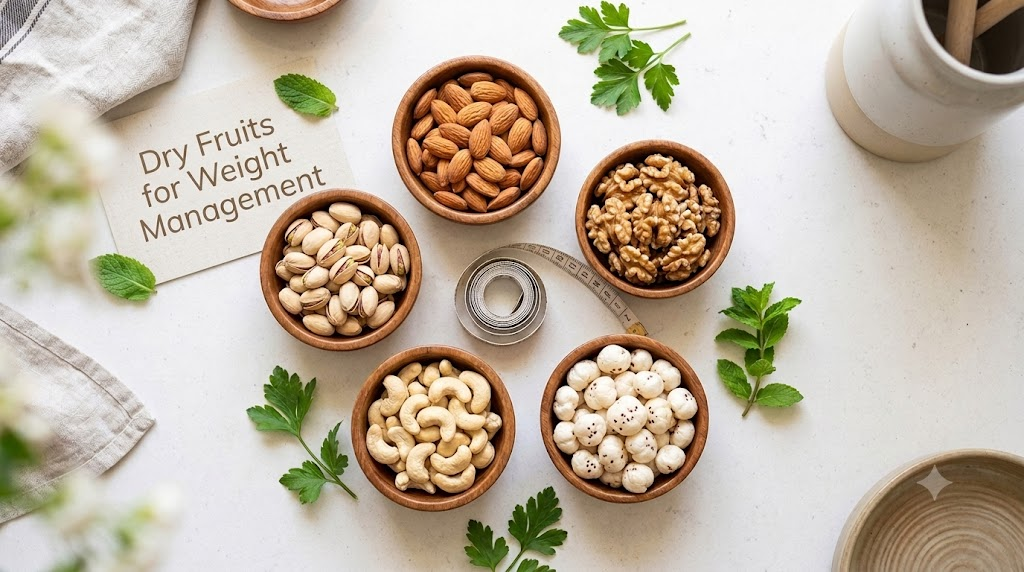
Can You Really Eat Dry Fruits and Still Manage Your Weight?
If you are trying to manage your weight, you may have heard two completely different opinions about dry fruits.
One person says, “Eat almonds every morning. They are healthy.”
Someone else says, “Stay away from nuts. They have too many calories.”
So, which one is right?
The answer sits somewhere in the middle.
Dry fruits and nuts can be part of a weight-conscious diet, but they are also calorie-dense. A few almonds or pistachios can be a sensible snack, while repeatedly eating straight from a large packet can add hundreds of calories without you even noticing.
The good news is that you do not need to remove dry fruits from your diet simply because you are watching your weight.
The key is choosing the right varieties, controlling portions and using them to replace less nutritious snacks rather than simply adding them on top of your existing meals.
In this guide, we will look at some of the best dry fruits for weight management, how much you can eat, when they may fit into your routine and the common mistakes that can work against your goals.
Why Can Dry Fruits Help With Weight Management?
Nuts and several dried fruits contain a combination of nutrients that can make snacks more satisfying.
Nuts such as almonds, walnuts and pistachios provide protein, unsaturated fats, fibre and important micronutrients. These nutrients can help you feel satisfied after eating, which may make it easier to manage unnecessary snacking.
Think about a typical Indian workday.
You have breakfast in the morning, lunch around 1 or 2 pm and then the familiar 4 or 5 pm hunger arrives. If the easiest option available is biscuits, namkeen or sweets, it is easy to eat more than you planned.
A measured portion of nuts or roasted makhana can give you another option.
That does not mean dry fruits “burn fat.” They do not.
Their usefulness comes from what they contribute to your overall eating pattern and what they replace.
Research on nut consumption has also found that regular nut intake is not necessarily associated with weight gain despite nuts being energy-dense foods. However, portion size and total calorie intake still matter.
Almonds: A Simple Everyday Choice
Almonds are one of the easiest dry fruits to include in an everyday diet.
They provide:
- Protein
- Fibre
- Vitamin E
- Magnesium
- Unsaturated fats
A small portion can work well as a morning or afternoon snack.
Around 8 to 10 almonds is a practical portion for many adults, although individual calorie and nutrition needs vary.
You may prefer soaked almonds because they become softer and easier to chew. Soaking is a personal preference, though; it does not magically remove calories or turn almonds into a weight-loss food.
If you are looking for different varieties, you can explore Mewa Mitra’s almond collection, including Jumbo and Premium Almonds.
Walnuts: Small Portion, Rich Nutrition
Walnuts are particularly well known for their plant-based omega-3 fatty acid, alpha-linolenic acid (ALA).
They also provide healthy fats, protein, fibre and minerals.
The catch is that walnuts are energy-dense, just like other nuts.
You do not need a large handful to enjoy them.
Around 2 to 3 walnut halves can be enough for a small snack or topping. Try adding chopped walnuts to oats, yoghurt, fruit or a homemade breakfast bowl.
The important point is not to avoid walnuts because they contain fat. Instead, keep the portion appropriate for your overall diet.
Pistachios: A Snack That Naturally Slows You Down
Pistachios are another useful option when you want something crunchy.
One interesting practical advantage is that shelling pistachios can slow down the eating process. That extra time may make you more aware of how much you are eating compared with grabbing handfuls from a ready-to-eat snack.
A portion of around 20 to 25 pistachios can work as a snack for many adults, although the exact calorie count depends on the size and whether the pistachios are shelled.
Whenever possible, choose plain or lightly salted pistachios if you are also trying to keep your sodium intake under control.
Cashews: Nutritious but Easy to Overeat
Cashews have a naturally creamy texture and mild sweetness, which makes them particularly easy to snack on.
They provide unsaturated fats, protein and minerals such as copper, magnesium and zinc.
However, like other nuts, cashews are calorie-dense.
A small portion of around 5 to 8 cashews can fit comfortably into many snack routines.
The main thing to remember is that cashews should complement your diet rather than become an unlimited snack.
If you want to understand their nutritional profile in more detail, read our guide to the health benefits of cashews.
You can also explore different varieties in the Mewa Mitra cashew collection.
Makhana: A Lighter Crunchy Snack
Makhana is technically a seed rather than a conventional tree nut, but it deserves a place in this conversation.
It is naturally light in texture and is commonly roasted before eating.
Plain roasted makhana can be a useful alternative when you are craving something crunchy but do not want a fried snack.
However, there is one important distinction.
Makhana itself may be relatively light, but adding generous amounts of ghee, butter, sugar or rich flavouring can substantially increase the calories.
If you want to understand whether makhana for weight loss is actually supported by nutrition science or is simply another internet trend, read our detailed guide to makhana for weight loss.
What About Pumpkin and Sunflower Seeds?
Seeds are another easy way to add variety to your snack routine.
Pumpkin seeds and sunflower seeds provide nutrients such as magnesium, zinc, protein and healthy fats.
You do not need a large quantity.
A tablespoon sprinkled over curd, oats, salads or homemade poha can add texture and nutrition without requiring much preparation.
The same rule applies here: seeds are nutritious, but they are not calorie-free.
If you want to explore different varieties, visit the Mewa Mitra seeds collection.
Dried Figs, Prunes and Dates: Healthy, But Portion Matters
Dried fruits are different from nuts.
When fruit is dried, much of its water is removed, which means the natural sugars and calories become concentrated into a smaller volume.
That does not make dried fruit unhealthy. It simply means portion control becomes more important.
Dried figs, or anjeer, and prunes can provide fibre and natural sweetness. One or two pieces can work well when you want something sweet after a meal.
Dates are nutritious too, but they are relatively concentrated in natural sugar and calories. If you are watching your calorie intake, one or two dates may be enough to satisfy a sweet craving.
A useful rule is:
Treat dried fruit more like a concentrated food than a fresh fruit replacement.
Which Dry Fruits Should You Limit?
You do not necessarily have to eliminate any particular dry fruit.
Instead, pay attention to products where additional ingredients significantly change the nutritional profile.
Be more careful with:
- Sugar-coated nuts
- Chocolate-coated almonds
- Honey-roasted nuts
- Caramelised nuts
- Heavily salted mixes
- Sweetened dried fruit
- Large servings of raisins
- Large servings of dates
- Flavoured mixes with added oils
For everyday use, plain, raw or dry-roasted varieties are often easier to manage because you have greater control over the added ingredients.
Always check the ingredient list and nutrition panel when buying packaged products.
How Much Dry Fruit Should You Eat?
This is probably the most important part of the entire article.
Healthy food can still contribute too many calories when the portion becomes too large.
You do not have to weigh every almond or walnut, though.
Here is a simple visual guide:
| Dry fruit or nut | Practical serving |
|---|---|
| Almonds | 8–10 pieces |
| Cashews | 5–8 pieces |
| Walnut | 2–3 halves |
| Pistachios | Around 20–25 pieces |
| Roasted makhana | 1–2 small handfuls |
| Seeds | Around 1 tablespoon |
| Dried figs | 1–2 pieces |
| Dates | 1–2 pieces |
For many healthy adults, around 30 grams of nuts per day is a commonly used serving size. Your ideal intake can be higher or lower depending on your calorie requirements and overall diet.
The important thing is to avoid turning a small snack into several large handfuls.
A Simple Dry Fruits Diet Plan for an Indian Home
You do not need an expensive diet plan or a complicated meal-preparation routine.
A simple day might look like this:
Early morning
5 almonds and 2 walnut halves alongside your normal morning routine.
Breakfast
Vegetable poha, oats, upma or another balanced breakfast with a small amount of chopped nuts or seeds.
Mid-morning
A seasonal fruit.
Lunch
A balanced Indian meal with dal, vegetables, roti or rice, salad and curd according to your dietary needs.
Evening
A small bowl of roasted makhana or a measured serving of pistachios with tea or green tea.
Dinner
A balanced, lighter meal based on your appetite and nutritional needs.
After dinner
If you genuinely want something sweet, one small dried fig or date can be an option.
This is not a rigid prescription. It is simply an example of how dry fruits can fit into a normal Indian eating routine without making them the centre of every meal.
When Is the Best Time to Eat Dry Fruits?
There is no scientifically proven “perfect” time that makes dry fruits burn more fat.
For most people, the best time is simply when they help you manage hunger without pushing your total calorie intake too high.
Morning can be convenient if you enjoy nuts with breakfast.
Mid-afternoon can also be useful because this is when many people reach for biscuits, namkeen or sweets.
Eating a small portion at night is not automatically unhealthy either. What matters more is your total intake and whether late-night snacking causes you to eat beyond your needs.
So instead of asking, “What is the magical time to eat almonds?”, ask:
“When do I normally get hungry, and can a measured portion of dry fruits help me make a better choice?”
Practical Portion-Control Tricks
This is where real-life habits make a bigger difference than complicated nutrition rules.
Do not eat directly from the packet
Pour your serving into a small bowl and put the packet away.
Prepare portions in advance
Keep small containers with your daily serving in your office bag or kitchen.
Use smaller packs
If you frequently overeat from large packets, buying smaller quantities can make portion control easier.
You can explore different pack options through the Mewa Mitra dry-fruit collection.
Mix nuts with other foods
Instead of eating a large bowl of nuts alone, add a small amount to oats, curd, fruit or salads.
This gives you variety without relying on nuts for every snack.
Common Mistakes People Make With Dry Fruits
Even the best dry fruits for weight management will not help much if the overall eating pattern works against you.
Mistake 1: Eating unlimited amounts
“Nuts are healthy” does not mean “nuts have no calories.”
Mistake 2: Replacing proper meals
Dry fruits are a snack, not a complete replacement for balanced meals.
Your body still needs adequate protein, vegetables, whole grains or other carbohydrate sources, and a variety of micronutrients.
Mistake 3: Eating while distracted
Watching television or scrolling on your phone while eating directly from a packet makes it very easy to lose track of portions.
Mistake 4: Choosing heavily coated products
Sugar, chocolate, honey, caramel, butter and excess salt can turn a simple snack into something much more energy-dense.
Mistake 5: Expecting quick results
Weight management is not a seven-day challenge.
Your eating pattern, physical activity, sleep, stress and other lifestyle factors all matter.
Dry fruits can support better choices, but they cannot compensate for an overall diet that consistently provides more energy than your body needs.
What If You Have a Health Condition?
General nutrition advice cannot replace personalised medical guidance.
If you have diabetes, kidney disease, high cholesterol, PCOS, thyroid disease or another condition that affects your dietary needs, speak with a doctor or registered dietitian before making major changes to your diet.
People with diabetes, for example, may need to pay particular attention to portions of dried fruits such as dates, raisins and figs because their natural sugars are concentrated.
Our guide to diabetic-friendly dry fruit snacking can provide general information, but your individual medical advice should always take priority.
Frequently Asked Questions
Which dry fruit is best for weight loss?
There is no single dry fruit that causes weight loss. Almonds, walnuts, pistachios and makhana can all be useful in a weight-conscious diet when eaten in appropriate portions.
Can I eat dry fruits every day while trying to lose weight?
Yes. Dry fruits can be eaten regularly as part of a balanced diet. The main consideration is portion size because nuts and many dried fruits are relatively calorie-dense.
Can I eat dry fruits on an empty stomach?
Many people can comfortably eat nuts in the morning, either alone or with breakfast. Soaking almonds is a common household practice, but it is not essential for everyone. If eating nuts on an empty stomach causes discomfort, simply have them with or after a meal.
Do dry fruits cause belly fat?
Dry fruits do not specifically cause belly fat. However, regularly consuming more calories than your body needs can contribute to overall weight gain and increased body fat.
Are raisins and dates good for weight management?
They can be included in moderation. Because drying removes much of the water from fruit, raisins and dates are more concentrated in natural sugars and calories than their fresh counterparts.
What are the best low-calorie dry fruits?
Makhana is often considered a lighter snack option because of its low-fat profile and airy volume. However, most nuts are calorie-dense, so the more useful approach is to focus on appropriate portions rather than searching for a completely low-calorie nut.
Final Thoughts
The best dry fruits for weight management are not necessarily the ones with the most impressive health claims.
They are the ones you can eat in sensible portions, enjoy regularly and use in place of less nutritious snacks.
Almonds can be your morning option. Pistachios can make a satisfying afternoon snack. Walnuts can add healthy fats to breakfast. Cashews can provide variety, while roasted makhana can satisfy that evening craving for something crunchy.
You do not have to choose just one.
The bigger picture matters more: balanced meals, sensible portions, regular movement, adequate sleep and consistency over time.
So the next time someone tells you to completely avoid dry fruits because you are trying to lose weight, remember that the answer is more nuanced.
Dry fruits are calorie-dense foods, but they can still have a place in a well-planned weight-management diet.



 Almonds
 Cashew
 Kaju Katli
 Makhana
 Peanuts
 Pistachios
 Raisins
 Seeds
Seeds Walnuts