Get 5% Off your first order! Use Code : MEWAMITRA5
Free Flavoured Cashews on Orders Above ₹2999
🚚 Free Shipping on Orders Above ₹799 | Shop Now & Save More!
Mewa Mitra Royal Combo – ₹1,392 | Premium Dry Fruits
Mewa Mitra Signature Combo – ₹1172 | Best Seller
Mewa Mitra Classic Combo – ₹888 | Value Pack
Mewa Mitra Elite Combo – ₹489 | Value Pack
Get 5% Off your first order! Use Code : MEWAMITRA5
Free Flavoured Cashews on Orders Above ₹2999
🚚 Free Shipping on Orders Above ₹799 | Shop Now & Save More!
Mewa Mitra Royal Combo – ₹1,392 | Premium Dry Fruits
Mewa Mitra Signature Combo – ₹1172 | Best Seller
Mewa Mitra Classic Combo – ₹888 | Value Pack
Mewa Mitra Elite Combo – ₹489 | Value Pack


Navratri Fasting Dry Fruits : What Can You Eat During Vrat?

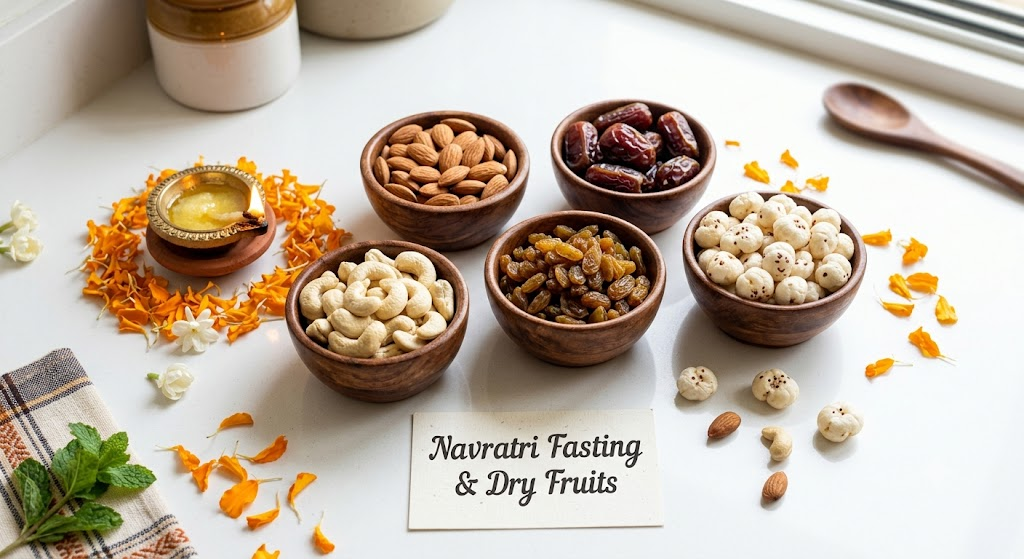
Navratri is one of those festivals when food becomes a little different in many Indian homes. Regular meals make way for fruits, milk, curd, vrat-friendly flours, sabudana, potatoes, makhana, nuts and dry fruits.
And that is usually when the questions begin.
Can you eat cashews during Navratri? Are almonds allowed? Is makhana okay? What about salted nuts? Can you eat dates and raisins?
These questions come up every year because fasting traditions are not exactly the same everywhere. What is permitted in one family or region may not be followed in another.
At Mewa Mitra, we hear many of these questions during the festive season. With more than seven decades of experience in the dry-fruit trading business, we understand why people want to know exactly what they are buying and eating during vrat.
So, here is a simple guide to Navratri fasting and dry fruits, based on practices commonly followed in many Indian households.
One important point before we begin: fasting customs differ between families, communities and regions. If your family follows a specific vrat tradition, that should come first.
The Basic Idea Behind a Navratri Fast
During Navratri, many people avoid foods such as wheat, rice, regular pulses, onion, garlic and ordinary table salt.
Instead, vrat meals often include foods such as:
- Fruits
- Milk and curd
- Potatoes and sweet potatoes
- Kuttu atta
- Singhara atta
- Rajgira
- Sabudana
- Makhana
- Nuts and dry fruits
- Certain seeds
Regular table salt is commonly replaced with sendha namak, also known as rock salt.
This is why plain nuts and dry fruits are commonly included in fasting meals. They do not contain grains or pulses and can be eaten on their own or added to vrat recipes.
The important part is to check how the dry fruit has been prepared.
A plain almond and a masala-coated almond may look similar at first glance, but their ingredients can be very different.
Which Dry Fruits Are Commonly Eaten During Navratri?
Cashews
Plain cashews are commonly eaten during vrat. They can be enjoyed as a snack, added to kheer or used in fasting recipes.
If you prefer roasted cashews, check the seasoning carefully. Plain roasted cashews or those prepared with ingredients permitted by your fasting tradition are generally easier to fit into a vrat diet.
You can explore Mewa Mitra’s plain cashew collection for everyday and festive use.
Almonds
Almonds are one of the simplest dry fruits to include during fasting.
Many people eat them raw or soaked, while others add chopped almonds to milk, fruit bowls and vrat desserts.
Explore Mewa Mitra’s almond range for plain almond options.
Walnuts
Walnuts can be eaten on their own or added to fruit bowls, milk-based recipes and homemade fasting snacks.
Because they have a rich flavour, even a small amount can add texture and taste to a simple vrat meal.
Pistachios
Plain pistachios are also commonly included during Navratri.
If you buy salted pistachios, check the label carefully to make sure the seasoning fits your family’s fasting rules.
Raisins
Raisins are popular during vrat because they add natural sweetness to dishes without requiring large amounts of added sugar.
They can be used in:
- Vrat kheer
- Fruit bowls
- Homemade trail mixes
- Milk-based drinks
- Fasting desserts
You can explore Mewa Mitra’s raisin collection for different options.
Dates
Dates are naturally sweet and are often eaten during fasting, particularly when someone wants something sweet or needs a quick snack.
They can also be stuffed with almonds or cashews for a simple homemade vrat treat.
As with other dried fruits, portion size matters because dried fruits are concentrated sources of natural sugars and calories.
Dried Figs
Dried figs, or anjeer, are another dry fruit commonly enjoyed during fasting.
They can be eaten as they are or soaked and added to milk or other vrat-friendly preparations.
Makhana
Makhana is perhaps one of the most popular foods associated with modern Navratri snacking.
It can be roasted and seasoned, added to kheer or used in different fasting recipes.
For a simple snack, dry roast makhana and add the seasoning allowed by your fasting tradition.
You can also read our detailed guide on makhana for weight loss to learn more about portions and preparation.
Dry Coconut, Chironji and Melon Seeds
These ingredients are commonly used in festive and fasting recipes.
They can be added to homemade sweets, kheer or other vrat-friendly preparations depending on your family’s customs.
Peanuts
Peanuts are used in many fasting dishes, including sabudana khichdi and peanut-based chutneys.
However, fasting traditions differ, and some families or communities may avoid certain ingredients.
If peanuts are part of your family’s vrat tradition, choose plain or appropriately prepared peanuts and check the ingredients before buying packaged varieties.
What Should You Avoid or Check Carefully?
The biggest problem with packaged fasting snacks is often not the main ingredient but the seasoning.
A packet may simply say “roasted salted nuts,” but the ingredient list can tell you much more.
Flavoured or masala-coated nuts may contain:
- Regular iodised salt
- Onion powder
- Garlic powder
- Spice blends
- Flavour enhancers
- Added sugar
- Other ingredients that may not fit your fasting tradition
This is why plain dry fruits are usually easier to manage during vrat.
Our guide to flavoured versus plain roasted cashews can help you understand what to look for when checking seasoned products.
How to Read a Dry Fruit Label During Vrat
You do not need to spend several minutes studying a packet.
A quick label check can help.
Look for words such as:
- Onion
- Garlic
- Iodised salt
- Mixed spice
- Seasoning
- Flavouring
- Added sugar
If salt is included, check whether it is specifically identified as rock salt if that matters to your fasting practice.
Also check the packing date and storage instructions, particularly when buying dry fruits for the entire Navratri period.
When in doubt, choose plain dry fruits and add permitted ingredients at home.
Foods That Pair Well With Dry Fruits During Vrat
Dry fruits work particularly well with other simple fasting foods.
Depending on your family’s tradition, you can combine them with:
- Kuttu atta
- Singhara atta
- Rajgira
- Sabudana
- Sama rice
- Potatoes
- Sweet potatoes
- Pumpkin
- Bottle gourd
- Curd
- Milk
- Paneer
- Seasonal fruits
This gives you plenty of options without relying on fried vrat foods every day.
A Simple Day of Vrat Eating
There is no single correct Navratri meal plan because fasting practices and personal needs vary.
But a simple day could look something like this:
Morning: Warm milk with a few soaked almonds and one or two dates.
Mid-morning: A bowl of seasonal fruit such as apple, papaya or banana.
Lunch: Kuttu roti or sama rice with a vrat-friendly vegetable and curd.
Afternoon: A small bowl of roasted makhana seasoned according to your fasting tradition.
Evening: Coconut water or buttermilk with a small portion of cashews or raisins.
Dinner: Light sabudana khichdi with peanuts, or a simple paneer and lauki preparation.
The idea is to keep meals balanced and satisfying rather than relying on fried foods throughout the day.
Three Easy Vrat Snacks With Dry Fruits
1. Quick Makhana Kheer
Dry roast around one cup of makhana until crisp.
Lightly crush some of it and add it to simmering milk. Cook until the makhana becomes soft.
You can add chopped cashews, a few raisins and cardamom. Sweeten according to your preference and the fasting rules you follow.
2. Stuffed Dates
Remove the seeds from a few dates and place a small almond or cashew inside each one.
That is it.
You have a simple sweet bite without needing a complicated recipe.
3. Homemade Vrat Trail Mix
Combine a small portion of:
- Almonds
- Cashews
- Raisins
- Roasted makhana
Add only the seasoning permitted by your fasting tradition.
Prepare a small jar at the beginning of the day instead of eating directly from a large packet. This makes portion control much easier.
How Much Dry Fruit Should You Eat During Vrat?
Dry fruits are nutritious, but that does not mean you need large quantities.
A small handful of mixed nuts can be enough for a snack. You can also include one or two dates or figs depending on the rest of your diet.
Eating too much at once may leave you feeling heavy, particularly if you are eating them on an empty stomach.
If weight management is also a concern, our guide to the best dry fruits for weight management explains how portions can make a difference.
Your appetite, activity level and overall meals also matter, so there is no need to follow one fixed quantity throughout the nine days.
Staying Comfortable and Healthy While Fasting
Fasting can change your usual eating and drinking routine, so it is important to pay attention to how your body feels.
Try to:
- Drink enough fluids
- Include fruits and vegetables allowed during your vrat
- Include protein sources such as curd, paneer, nuts and seeds
- Avoid relying heavily on deep-fried foods
- Eat sensible portions
- Get enough rest
- Avoid unnecessarily long gaps between meals if your fasting tradition permits regular meals
Foods such as pakoras, puris and fried sabudana dishes may be traditional favourites, but having them at every meal can make you feel sluggish.
A simple vrat meal can often be easier on the body than a very oily one.
Who Should Be More Careful While Fasting?
Not everyone should begin a prolonged or restrictive fast without considering their health needs.
People with conditions such as:
- Diabetes
- Kidney disease
- High blood pressure
- Other chronic health conditions
and people who are pregnant, breastfeeding or taking regular medication should discuss fasting with their healthcare professional when appropriate.
If you have diabetes, changes in meal timing and carbohydrate intake can affect blood glucose. Our guide to diabetes-friendly dry fruit snacking can provide general information, but it should not replace advice from your doctor or dietitian.
Shopping Tips for Your Navratri Pantry
If you are buying dry fruits for Navratri, a few simple habits can make the process easier.
Choose Plain Options
Plain almonds, cashews, walnuts, pistachios and other dry fruits give you more control over the ingredients.
You can add permitted seasoning at home.
Check the Packing Date
Freshness matters, especially when you are buying enough dry fruits to last through the festival.
Buy the Right Quantity
Buying large quantities is not always necessary. Choose an amount your family can consume while the products are still fresh.
Store Them Properly
Keep dry fruits in clean, airtight containers and store them according to the product’s storage requirements.
For more information about judging cashew quality, see our raw cashew grading guide.
When you are ready to shop, explore the Mewa Mitra dry fruit collection or browse the complete range of products.
What About Festive Sweets?
Navratri and the wider festive season naturally bring sweets into the picture.
Kaju katli, for example, is a popular festive mithai made primarily with cashews and sugar.
Whether a particular sweet fits your vrat depends on the ingredients used and the fasting tradition you follow.
If you are observing a strict fast, check with your family’s tradition before including any packaged or prepared sweet.
For celebrations and gifting, you can explore Mewa Mitra’s Kesar Kaju Katli collection.
If you are looking for a dry-fruit gift for the festive season, our guide to premium kaju gift boxes can also help you explore gifting ideas.
Frequently Asked Questions
Can we eat cashews during Navratri?
In many fasting traditions, plain cashews are allowed. However, vrat rules differ, so follow the customs observed by your family or community.
Are almonds allowed during Navratri?
Yes, almonds are commonly eaten during Navratri fasting. They can be eaten raw, soaked or added to vrat-friendly recipes.
Can I eat salted nuts during vrat?
It depends on how they are seasoned and the fasting tradition you follow. If you use salted nuts, check whether they contain only permitted salt such as sendha namak and no other seasoning.
Is makhana allowed during Navratri?
Makhana is one of the most commonly eaten fasting foods. It can be roasted, added to kheer or used in several vrat recipes.
Can we eat roasted peanuts during vrat?
Many families include peanuts during fasting, particularly in dishes such as sabudana khichdi. However, some traditions differ, so check your family’s practice.
Can we eat raisins during Navratri?
Raisins are commonly used during vrat in dishes such as kheer, desserts and snack mixes. As with all fasting foods, preparation and individual tradition matter.
Can we eat dates during Navratri?
Dates are commonly eaten during fasting and can be used as a natural sweet snack or added to vrat recipes. Keep portions sensible because dates are naturally high in sugar.
Are dry fruits enough to keep you full during fasting?
Dry fruits can provide fats, fibre and some protein, but they are only one part of a balanced vrat diet. Combine them with suitable foods such as curd, paneer, fruits and vrat-friendly grains or vegetables according to your tradition.
Final Thoughts
Navratri fasting does not have to mean eating the same fried snacks every day.
With plain dry fruits, makhana, fruits, curd, paneer and other vrat-friendly ingredients, you can create simple meals and snacks that feel satisfying while respecting your fasting tradition.
The easiest rule to remember is:
Keep the ingredients simple, check the label and follow your family’s fasting customs.
Plain dry fruits also give you more control because you can decide what seasoning or other ingredients to add at home.
Whether you are preparing vrat snacks for your family, making Navratri kheer or putting together a festive dry-fruit gift, a little planning can make the season much easier.
Explore the Mewa Mitra blog for more festive dry-fruit guides, recipes and practical tips, or browse our complete dry-fruit collection for everyday and festive needs.



 Almonds
 Cashew
 Kaju Katli
 Makhana
 Peanuts
 Pistachios
 Raisins
 Seeds
Seeds Walnuts